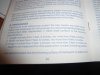
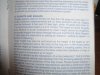
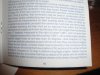
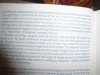
Note: Bold and underline highlights are mine. Notice the use of the words recommended and should instead of required and must. Also note that there is only a 1 mph difference between the ATA minimum and maximum speed when using a radar gun. The Decatur radar gun specs list an accuracy of plus or minus 1 mph. I could not find an accuracy rating on the Stalker gun. The result is a radar gun with an accuracy of plus or minus 1 mph can not insure a correct ATA speed of 42-43 mph for singles or handicap target. Same applies to the correct min/max speed for doubles.
SECTION XIII
STANDARDS FOR TRAPHOUSES, TARGETS, TARGET SETTING,
GUNS AND AMMUNITION
A. TRAP MACHINE
A trap machine, which throws targets at an unknown angle, shall be used. All
trap machines used to throw ATA registered targets shall be so manufactured,
modified, or equipped as to interrupt irregularly the oscillation of the trap or
otherwise assure the unpredictability of the flight of substantially all targets thrown.
46
Each gun club that throws ATA registered targets must have on file in the
ATA main offices a signed Affidavit that the trap machines used to throw
registered targets meet the requirements of this rule. The State/Provincial
ATA Delegate is responsible for the enforcement of this Rule.
B. TRAPHOUSES
Traphouses must adequately protect the trap loaders and shall not be
higher than necessary for that purpose. It is recommended that traphouses
constructed after September 1, 2003 shall conform to the following
specifications:
1. Length not less than 7 feet, 6 inches, nor more than 9 feet, 6 inches.
2. Width not less than 7 feet, 6 inches, nor more than 9 feet, 6 inches.
3. Height not less than 2 feet, 2 inches, nor more than 3 feet, 0 inches, the
height to be measured from the plane of the number 3 shooting position.
It is recommended that the throwing surface (throwing arm or plate) of the
trap machine be on the same level as that of Post 3 and the target height
setting pad.
C. POSTS
The posts shall be 3 yards apart on the circumference of a circle whose
radius is 16 yards. Handicap posts, when used, shall be prolongations of
the lines given in Diagram I (p. 55), commonly known as fan shaped. The
distance between posts at 16-yards shall then be 3 yards.
D. TARGETS
No target shall measure more than four and five-sixteenths (4 5/16) inches
in diameter, and not more than one and one-eighth (1 1/8) inches in height.
A target shall not weigh less than 95 grams or more than 105 grams with
an allowable variation of plus or minus 5 grams per target lot. A target lot
is defined as all targets with the same production number.
E. FLIGHTS AND ANGLES
Singles targets shall be thrown not less than 49 yards nor more than 51
yards. Distance measurements are on level ground in still air. Targets
shall be between 8 feet and 10 feet high, when 10 yards from Point B.
The recommended height is 9 or 9 1/2 feet. The height at a point 10 yards
from Point B is to be understood to mean height above an imaginary
horizontal straight line drawn through the post and Point B. (See Diagram
II) (See also the alternative to setting by distance - setting by speed - in
Section F, following.)
Target height may also be set based on the height of the target at ten
yards as measured above the level of the trap arm in the house rather
than the height as measured from the number 3 shooting station. This is
the recommended procedure at facilities where the installation of traps in
the houses is inconsistent as to height.
Point B is defined as the intersection of a line measured 1 foot 6 inches
from the outside vertical wall (farthest from the shooting stations) of the
trap house and the centerline of the trap house. Please review Diagram I
on page 54. If the trap machine manufacturer specifies a dimension other
47
than 1 foot 6 inches, that dimension may be used in construction of the
trap house. Clubs constructing new trap house and fields should use the
same point B measurement as their existing fields to keep all fields as
consistent as possible, provided the same trap machines are being used.
In Singles shooting the trap shall be so adjusted that within the normal
distribution of angles as thrown by the trap, the right angle shall not be less
than 17 degrees measured to the right of center (3BF), and not less than
17 degrees measured to the left of center (3BF), with a total angle between
outside target limits of not less than 34 degrees. (See Diagram II) Trap
machines shall be adjusted so as to throw not less than equivalent angles.
Where terrain allows, a visible stake may be placed on the centerline of the
trap on the arc of a circle that has a radius of 50 yards and its center is Point
B (Point F, Diagram II). To help in determining legal angles, stakes may be
placed on the arc of a circle that has a radius of 50 yards and its center is
Point B. One stake should be placed where a line drawn through Point A
and Point B intersects this arc and another stake placed where a line drawn
through Point C and Point B intersects the arc These lines and stakes will
assist in determining the required angles, but it is to be understood that the
angle specifications apply when the target is from 15 yards to 20 yards from
the trap rather than where the target strikes the ground. However, no target
is to be declared illegal unless it is significantly outside normal parameters
(e.g., more than 10 degrees outside normal).
In doubles shooting, targets shall be thrown not less than 44 yards nor more
than 46 yards. Distance measurements are on level ground in still air. Targets
shall be between 8 feet and 10 feet high when 10 yards from point B. The
recommended height is 9 or 9 1/2 feet. The height at a point 10 yards from Point
B is to be understood to mean height above an imaginary horizontal straight
line drawn through the post and Point B (See Diagram II). The trap shall be
adjusted so the angle of target spread is not less than 34 degrees. (See the
alternative to setting by distance - setting by speed - in Section F, following.)
Target height may also be set based on the height of the target at ten yards
as measured above the level of the trap arm in the house rather than the
height as measured from the number 3 shooting station.
The 17 degree angle will appear to be a straight-away from a point 3 1/2 feet
to the right of post 1; the 17 degree angle will appear to be a straight- away
from a point 3 1/2 feet to the left of post 5. This 17 degree angle refers to
the flight line of the target from the house to 15 or 20 yards out and can be
used for singles, handicap, and doubles targets.
F.
RULES FOR THE USE OF RADAR GUNS AND CHRONOGRAPHS
TO SET TARGET SPEED
There are two types of radar guns, high-power and low-power. The practical
difference between them is that high-power guns work reliably from the
16-yard line and low-power guns don’t.
High-power guns (Decatur, Stalker, most “police radar guns” and similar)
48
may be used at the 16-yard line. The trap oscillation is stopped, and the
target measured is a straightaway. The gun is pointed horizontally. The
correct speed for a singles or handicap target
is a minimum
of 42 MPH,
maximum 43 MPH. The correct speed for the right target of a doubles pair
must be a minimum
of 39 MPH, maximum of 40 MPH.
Low-power guns (SportRadar, Bushnell, and similar) are to be used at the
back of the traphouse and at the level of the top of the traphouse. (Holding
the gun higher than that will lead to a target which is too fast.) The trap
oscillation is stopped, and the target measured is a straightaway. The gun
is pointed horizontally. The correct speed for a singles or handicap target
must be a minimum
of 42 MPH, maximum of 43 MPH. The correct speed
for the right target of a doubles pair
must be a minimum
of 39 MPH,
maximum of 40 MPH. When a radar gun is used from inside the house,
the correct speed for a singles or handicap target
must be a minimum
of 44 MPH, maximum of 45 MPH. The correct speed for the right target
of a doubles pair
must be a minimum
of 41 MPH, maximum of 42 MPH.
A chronograph is to be used as close to the trap as practical and tipped
up at approximately the same angle as the flight of the target. The correct
speed for a singles or handicap target is 67 ft/sec minimum, maximum of
69 ft/sec. To set doubles with a chronograph, set a singles target to 76 ft/
sec minimum, maximum 78 ft/sec. and then switch the trap to throw doubles
without changing the spring tension.
Note: target speed may be set by distance as above or by speed as
determined by a radar gun or chronograph. Target must be set by measured
speed or distance.